 (604) 484-9376
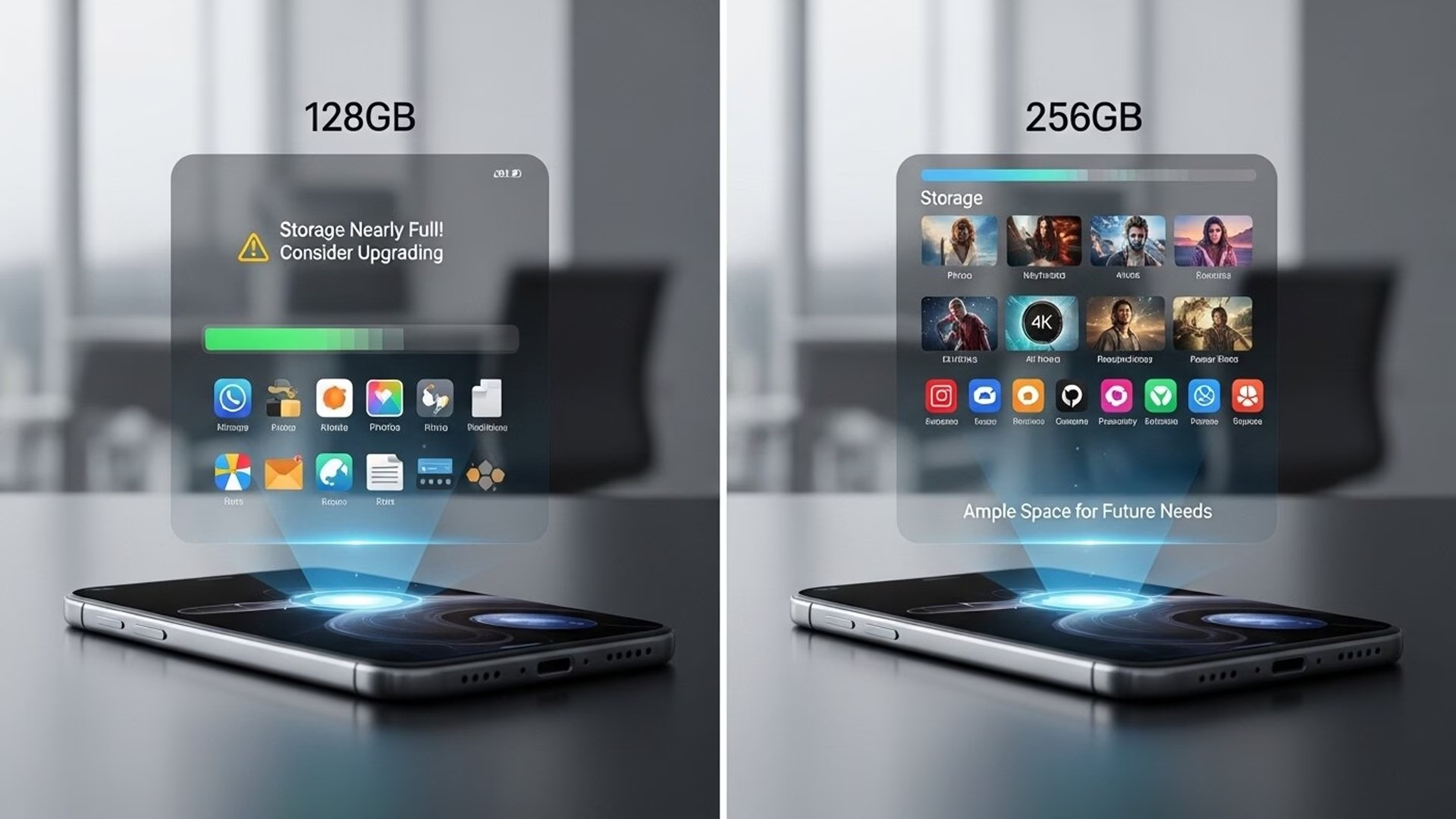
128GB vs 256GB Storage: Which Phone Size Makes Sense in 2026?
Published on April 15, 2026
Not sure whether to buy 128GB or 256GB? We break down which storage size makes sense for your lifestyle in 2026 — so you can buy smart and avoid regret.
There is a moment almost every phone buyer knows. You are standing in the store, or scrolling through an online order page, and you get to the storage selection. 128GB or 256GB. The price difference is real. The difference in everyday life? That feels harder to figure out.
This guide is written to help you make a clear, confident decision — not to overwhelm you with technical jargon. Whether you are buying a new iPhone, a Samsung Galaxy, or any other Android device, the right storage choice depends on how you actually use your phone, not on what sounds impressive on a spec sheet.
Why Storage Has Become a Bigger Decision Than It Used To Be
A few years ago, 64GB was enough for most people. That is no longer true in 2026, and it is worth understanding why.
Modern smartphones take stunning photos — and those photos are large files. A single ProRAW image on an iPhone can be over 50MB. A one-minute 4K video can easily eat up 400MB or more. Add to that the growing size of apps, social media platforms that cache content locally, offline downloads from Netflix or Spotify, and the ever-increasing size of iOS and Android system updates — and storage disappears faster than most people expect.
Most people do not realise how quickly their phone fills up until they see that dreaded "Storage Almost Full" notification. By then, they are already deleting memories to make room for new ones.
What Your Phone's Storage Actually Looks Like Out of the Box
Here is something that often surprises buyers: the number on the box is not the number you actually get to use. The phone's operating system, pre-installed apps, and system files take up a portion of that storage before you ever download a single thing.
In practice, a 128GB phone typically gives you around 105GB to 115GB of usable space. A 256GB phone usually leaves you with roughly 220GB to 235GB. That gap matters more the longer you keep your device.
If you plan to hold onto your phone for two or three years, that usable space shrinks further over time as app updates grow and your photo library builds up.
Who Is 128GB Actually Right For?
128GB is not a bad choice — it is simply the right choice for a specific kind of user. If you are someone who streams music rather than downloading it, uses Google Photos or iCloud to automatically back up your pictures, and keeps a clean phone with only the apps you actually use, then 128GB can serve you well.
It also makes sense if you upgrade your phone every one to two years. A shorter ownership cycle means you are less likely to hit a storage wall before your next upgrade. Students who mainly use their phone for messaging, social media, and light browsing often fall into this category as well.
The honest caveat: 128GB works well when you are actively managing your storage. That means occasionally clearing app caches, moving photos to cloud storage, and being selective about what you keep on-device. For some people, that is no trouble at all. For others, it becomes an ongoing frustration.
Who Should Seriously Consider 256GB?
256GB is becoming the sensible default for most users in 2026. The reason is simple — it removes the storage anxiety entirely. You stop thinking about what to delete and start focusing on how you actually want to use your phone.
If you take a lot of photos, especially of your kids, travel, or everyday moments you want to keep, 256GB gives you room to breathe. If you record video in 4K — whether for social media, personal memories, or professional use — you will fill 128GB much faster than you might expect. If you keep your phone for three years or more, the extra space pays for itself in peace of mind alone.
Parents, content creators, travellers, gamers, and anyone who uses their phone heavily for work tend to appreciate the extra headroom that 256GB provides. You are not paying for storage you will never need — you are paying to not have to think about it.
The Hidden Space Drains Most Buyers Do Not Think About
Photos and videos are the obvious culprits, but there are several other storage drains that quietly chip away at your available space without you noticing.
Messaging apps are one of the biggest offenders. If you are part of active WhatsApp or iMessage group chats, the videos and images shared in those conversations accumulate quickly — sometimes several gigabytes over the course of a year. Most people never think to clear them.
App caches are another issue. Instagram, TikTok, browsers, and streaming apps store temporary data locally to load content faster. Over time, that data can take up several gigabytes on its own. Mobile games are also far larger than they used to be — some titles require 10GB or more after updates, and that number grows over the life of the game.
Offline downloads are easy to forget about too. If you regularly save Netflix episodes for flights, download Spotify playlists for the gym, or use YouTube Premium's offline feature, those files add up faster than most people account for when choosing storage.
iPhone Users: What to Know Before You Decide
Apple's cameras have become genuinely exceptional, and that quality comes with a storage cost. Live Photos, ProRAW files, Cinematic Mode videos, and 4K recordings can fill a phone faster than users expect. If you are someone who uses your iPhone's camera regularly, 128GB can feel tight within the first year or two.
Many iPhone buyers choose 128GB to save money upfront, only to find themselves paying for iCloud storage on an ongoing basis to keep up with their photos and backups. In many cases, spending a little more on the 256GB model at the time of purchase works out to be better value over a two to three year ownership period.
That said, if you are a light iPhone user who relies on iCloud for photo backups and does not shoot a lot of video, 128GB remains a practical and affordable option.
Android Users: A Few Extra Considerations
For Android users, the decision involves one additional factor: does your phone support a microSD card? Some mid-range and budget Android devices still allow expandable storage, which makes 128GB a more flexible starting point — you can always add a card later if you need more space.
However, most premium Android phones have moved away from expandable storage. If you are buying a high-end Samsung Galaxy, Google Pixel, or similar flagship, the storage you choose at purchase is the storage you have for the life of the device. In that case, the same logic applies as with iPhones: if you use your camera heavily or plan to keep the phone for years, 256GB is the safer choice.
Does More Storage Make Your Phone Run Faster?
Not directly — storage capacity and processor speed are separate things. However, there is an indirect relationship worth understanding. When a phone's storage is nearly full, performance can suffer. Apps may take longer to load, system updates may fail to install, and the phone may become sluggish in everyday use.
Keeping a healthy amount of free space — generally at least 10 to 15 percent of total storage — helps your phone operate smoothly. A 256GB phone simply makes it easier to maintain that buffer over time without having to constantly manage what is on the device.
Is the Price Difference Worth It?
This depends entirely on how large the gap is between models. In many cases, the jump from 128GB to 256GB is more modest than buyers expect — sometimes a matter of weeks' worth of iCloud or Google One subscription fees.
Ask yourself a few honest questions: Do you regularly see low storage warnings on your current phone? Do you take a lot of photos and videos? Do you plan to keep this phone for more than two years? Do you dislike the routine of managing files and deleting content to make space? If the answer to most of these is yes, the extra cost of 256GB is likely worth it for you.
If you are unsure which model to go with, the team at CellFixx can help. Whether you are upgrading your device or troubleshooting storage issues on your current phone, having expert guidance makes the decision easier — and the experience smoother from the start.
Real-World Scenarios: Which Storage Fits Which Life?
Consider a university student who mainly uses their phone for Instagram, WhatsApp, lectures, and streaming. They back up photos automatically and upgrade every two years. For this person, 128GB is a smart, budget-conscious choice.
Now consider a parent who documents their child's milestones with hundreds of photos and videos each month, has years of family memories on their device, and keeps their phone for three to four years. For this person, 256GB is not a luxury — it is a practical necessity.
A freelancer or small business owner who scans documents, records client meetings, keeps work files on their phone, and uses it as a primary productivity device will almost always be better served by 256GB. The same is true for anyone who plays data-heavy mobile games or regularly creates content for social media.
Our Honest Recommendation for 2026
If you are a light or highly organised user who actively uses cloud storage and does not mind occasional maintenance, 128GB is still a viable option. You can make it work, and it will save you money upfront.
For most people, though, 256GB is the better buy in 2026. It is the storage size that feels comfortable rather than restrictive. It gives your phone room to grow with you over the years rather than becoming a source of constant frustration. And in a market where phones are increasingly expensive investments meant to last several years, buying the version you will not outgrow is usually the wiser long-term decision.
When in doubt, think about how often you have cleared photos or deleted apps just to free up space on your current device. If that has happened more than once or twice, 256GB is your answer.
Frequently Asked Questions
Is 128GB enough for an iPhone in 2026?
For moderate users who rely on iCloud for photo backups and do not shoot much video, yes. For heavy camera users or anyone keeping their phone for several years, 256GB is the more comfortable choice.
Is 256GB overkill for most people?
Not really. With modern app sizes, camera quality, and offline content, 256GB provides peace of mind rather than excess. Most users who choose it find they appreciate the breathing room within the first year.
Can I expand my storage later?
iPhones do not support expandable storage. Most premium Android phones have also moved away from microSD card support. Assume the storage you buy is permanent.
Which storage size has better resale value?
Higher storage models generally command better resale prices and attract more buyers, which is another reason to consider 256GB if you are on the fence.
Need help with your device? CellFixx has you covered.
Whether you need cell phone repair in Vancouver, Coquitlam, or Richmond, CellFixx offers fast, reliable service you can trust. Screen replacements, battery issues, software problems — our technicians handle it all.
Visit us today and get your device running like new.
128GB vs 256GB Storage: Which Phone Size Makes Sense
Published by CellFixx Vancouver
April 15, 2026